RV Slide-Out Mechanism Repair Fort Lauderdale FL | Rack, Hydraulic, Cable
RV slide-out rack and pinion, hydraulic cylinder, and cable drive mechanism repair in Fort Lauderdale FL. Our mobile team services all major mechanism types throughout Broward County at your campsite or driveway.
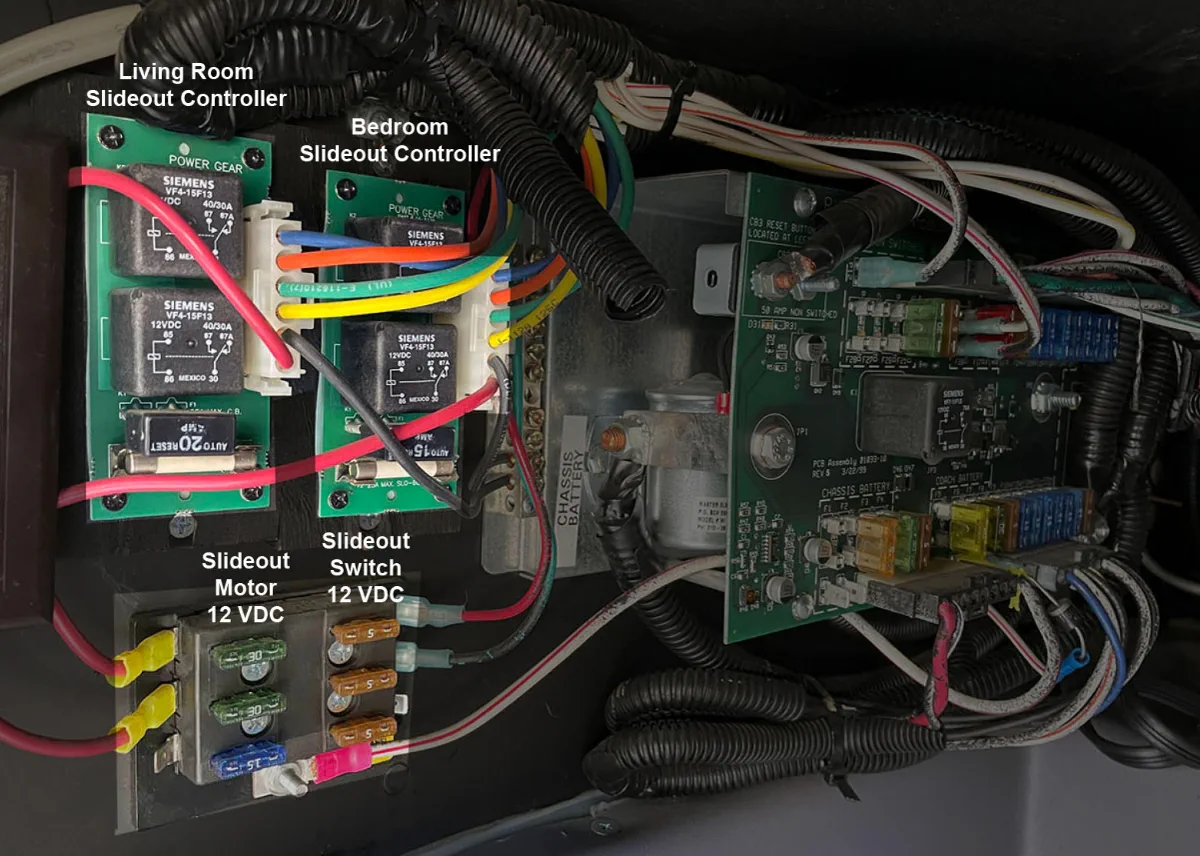
RV Slide-Out Mechanism Repair in Fort Lauderdale
The mechanism that moves your RV slide room - whether it is a rack and pinion assembly, a hydraulic cylinder and pump, or a cable drive system - takes on significant stress over years of operation in South Florida's demanding climate. Sand from Broward County's campgrounds contaminates gear racks. Heat degrades hydraulic cylinder seals. Salt air from Fort Lauderdale's coast corrodes floor track assemblies. When the mechanism fails, the slide room stops - and getting it moving again requires the right diagnosis, the right parts, and the correct repair procedure.
Our mobile technicians are trained on all major RV slide-out mechanism types: Lippert rack and pinion under-chassis systems, Schwintek in-wall gear rack systems, hydraulic cylinder systems used on Class A motorhomes, and legacy cable drive systems from Kwikee and BAL. We carry common replacement components on the service vehicle and can source specialty parts same-day from Broward County's RV supply network.
Rack and Pinion Systems
How the Rack and Pinion Mechanism Works
A rack is a linear strip of gear teeth. The pinion is a round gear that meshes with those teeth. When the electric motor spins the pinion, the teeth walk along the rack - converting the motor's rotational motion into linear force that pushes the slide room out or pulls it in. This is the same principle used in automobile steering racks, and like steering racks, RV slide racks wear at predictable rates under contamination and high load.
In Lippert under-chassis systems, the rack runs along the floor of the slide room and is pushed by a motor/gearbox assembly mounted under the RV chassis. The rack is exposed to everything that gets kicked up from the road surface: water, sand, and in coastal areas, salt spray. Annual cleaning and lubrication keeps the rack surface in service; a neglected rack can develop corrosion pitting and tooth wear within 3 to 4 years of Florida use.
In Schwintek in-wall systems, gear racks are embedded in the slide room walls and driven by smaller gear motors in the wall structure. The wall-mounted position protects the Schwintek racks from road debris, but they are still vulnerable to contamination from sand that enters through the seal area when the room is deployed at sandy Florida campgrounds.
Rack Failure Causes and Repair
The most common causes of gear rack failure in Broward County's climate are abrasive sand contamination (which grinds down the rack tooth profile), motor over-torque from a failing motor (which applies excessive force to a limited section of rack, breaking individual teeth), and corrosion on the rack surface for under-chassis systems near the coast. When our technicians find a failed rack tooth, they inspect the entire rack length and the pinion gear for additional damage before recommending a repair scope - a broken tooth at one point often indicates significant wear across a longer section.
Hydraulic Cylinder Systems
How Hydraulic Slide Cylinders Work
Hydraulic slide-out systems use a hydraulic pump (driven by a 12V electric motor) to pressurize fluid and direct it to double-acting cylinders - cylinders that can extend or retract under fluid pressure. A solenoid valve controls which direction fluid flows, determining whether the slide room deploys or retracts. The system typically shares a hydraulic pump and reservoir with the leveling jacks on larger Class A motorhomes.
Florida's heat is the primary accelerant for hydraulic cylinder seal failure. Hydraulic rubber seals rated for standard operating temperatures can reach their degradation threshold during summer heat in South Florida, particularly in dark-colored motorhomes parked in direct sun. Degraded seals allow fluid to bypass between the cylinder chambers - causing the room to creep inward after deployment, or fail to maintain full extension under load.
Cylinder Repair vs. Replacement
External seal leaks (visible fluid seeping from the cylinder shaft seal area) can sometimes be repaired with a seal rebuild kit if the cylinder bore and shaft are undamaged. Internal bypass (where the piston seal allows fluid to pass between chambers) requires either a piston seal rebuild or full cylinder replacement. Our team assesses the cylinder condition on site and gives you an honest recommendation - rebuild kits save money when the cylinder internals are in good condition; replacement is more cost-effective when the bore is scored or the shaft is pitted from corrosion.
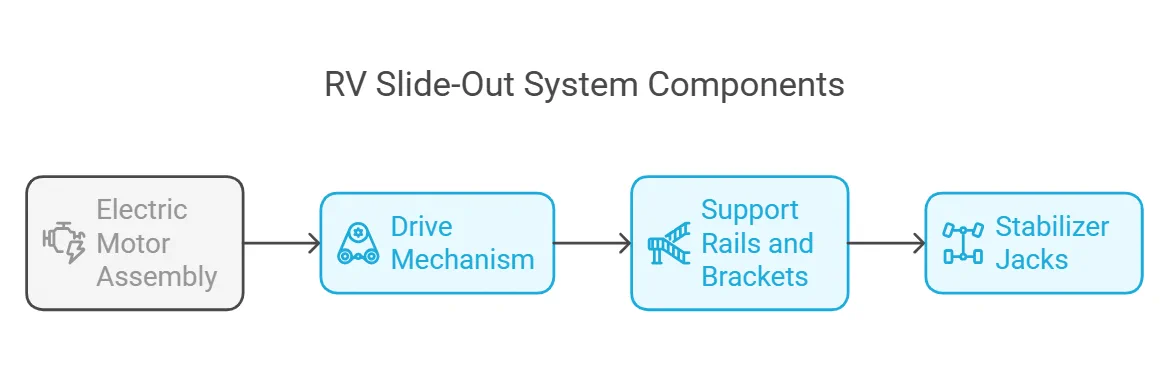
Slide-Out Mechanism Repair Pricing in Fort Lauderdale
| Service | Estimated Range |
|---|---|
| Mechanism Diagnosis | $89 - $149 |
| Gear Rack Cleaning and Lubrication | $75 - $150 |
| Schwintek Gear Rack Section Replacement | $275 - $550 |
| Lippert Floor Track Repair | $325 - $650 |
| Hydraulic Cylinder Replacement (per cylinder) | $450 - $950 |
| Hydraulic Line Repair | $125 - $295 |
| Hydraulic Fluid Flush and Refill | $95 - $175 |
| Cable Drive Mechanism Repair | $275 - $575 |
| Prices shown are estimates. Final pricing provided after on-site diagnosis. Parts cost separate. | |
Mechanism Repair FAQ - Fort Lauderdale
The rack is a long strip of teeth machined into a metal or nylon bar. The pinion is a small gear that meshes with the rack. When the motor rotates the pinion, it walks along the rack, converting rotational motor motion into linear motion that pushes or pulls the slide room. In Lippert under-chassis systems, the rack runs along the floor of the slide room and the pinion is driven by the motor/gearbox assembly. In Schwintek systems, smaller gear racks are embedded in the slide room walls. Rack failure is typically caused by debris contamination, lubrication failure, or a motor that has been overloaded and applied excessive torque to the rack teeth.
The most common symptom is a grinding or clicking sound during slide travel. If you hear a rhythmic clicking (one click per motor revolution), a single tooth has broken off the rack or pinion. A grinding sound during the entire travel indicates contamination in the rack teeth or significant wear across multiple teeth. A slide room that moves in short jerking motions rather than smoothly also indicates rack wear. Stop cycling the slide immediately if you hear grinding - continued operation can cause a catastrophic rack failure mid-travel.
Hydraulic cylinder failures in RV slide-out systems fall into two categories: external seal failure (the cylinder leaks hydraulic fluid visibly from the shaft seal area) and internal bypass (fluid passes from the high-pressure side to the low-pressure side through a worn piston seal, causing the cylinder to lose force and allow the slide room to slowly creep inward after deployment). External seal failure is obvious - you see fluid drips. Internal bypass is diagnosed by watching the slide room position over 10 to 15 minutes after deployment - creeping more than 1 inch indicates significant bypass. Florida's heat accelerates both failure types by degrading rubber seal compounds faster than in cooler climates.
In theory, yes - hydraulic cylinders can be disassembled and the piston and shaft seals replaced. In practice, the rebuild kits for RV slide-out hydraulic cylinders are available for most Lippert and Power Gear systems. However, the cost differential between a rebuild kit and a replacement cylinder is often small enough that replacement is more cost-effective when you factor in the labor for disassembly, seal replacement, reassembly, and bleeding. For cylinders with physical damage to the bore or shaft, replacement is the only option. Our technicians can advise based on the specific cylinder condition.
A hydraulic system fluid flush drains the existing fluid from the reservoir, flushes the lines and cylinders with fresh fluid to remove any contaminated or degraded material, and refills with fresh fluid matched to the system specification. In Florida's heat, hydraulic fluid oxidizes and breaks down faster than in cooler climates - oxidized fluid turns dark brown and loses its viscosity stability. A fluid flush is recommended every 3 to 4 years for RVs in active Florida use, or whenever the fluid appears dark or shows foaming during pump operation.
Fine silica sand - common at Broward County's campgrounds and prevalent throughout South Florida - infiltrates slide-out track channels, gear rack teeth, and track roller bearings. Once in the gear rack, sand acts as an abrasive between the rack teeth and the pinion gear. A contaminated rack surface can wear through the first few millimeters of tooth depth in as little as 12 to 18 months of active use. Regular cleaning and lubrication is the only effective preventive measure. We use a dry PTFE lubricant that does not attract additional sand contamination the way petroleum-based lubricants do.
A broken Schwintek gear rack tooth typically causes an immediate system shutdown - the motor stalls on the missing tooth, trips the overload protection, and the control board faults out. The slide room position at the time of failure determines the urgency: stuck retracted is inconvenient, stuck deployed prevents travel. Schwintek gear rack sections are replaceable without replacing the entire slide room - the rack is accessible through the slide room wall panels in most models. Our technicians stock the most common Schwintek rack section lengths.
RVs stored or regularly used near {CITY}'s coastline - in Deerfield Beach, Pompano Beach, Hallandale Beach, or Hollywood Beach - are exposed to salt-laden air that accelerates corrosion on all exposed metal components. The slide room floor track on Lippert under-chassis systems is particularly vulnerable because it sits below the RV floor in the underbelly where airflow is limited and moisture can accumulate. Salt corrosion on the track surface increases friction and accelerates motor wear. Annual lubrication and anti-corrosion treatment of the track is advisable for coastal Broward RVs.
Cable drive slide-out systems (Kwikee, BAL, and some older Equalizer systems) were common in the late 1990s and early 2000s. Replacement cable assemblies and drive gears are still available for most systems, though lead times have extended as production has shifted to more modern architectures. For very old systems where original parts are no longer available, there are aftermarket rebuild options and, in some cases, full system conversion to a modern electric motor system. Our team can advise on the most practical path for your specific RV and cable system vintage.
Mechanism repairs generally take longer than motor replacement because they require more disassembly access. A gear rack section replacement on a Schwintek system takes 2 to 4 hours depending on the wall panel access required. A hydraulic cylinder replacement takes 2.5 to 4 hours including system bleeding and leak testing. A floor track replacement on a Lippert under-chassis system takes 3 to 5 hours. Most mechanism repairs are completable in a single service visit.
Serving Fort Lauderdale and All of Broward County
When your RV needs slide-out repair in Fort Lauderdale or anywhere in Broward County, our certified mobile team comes directly to your location - no tow truck required, no dealership wait. We dispatch to all Broward cities including Hollywood, Pembroke Pines, Coral Springs, Davie, Deerfield Beach, Pompano Beach, Sunrise, Miramar, Hallandale Beach, Plantation, Lauderhill, and Weston. Most calls receive a same-day or next-morning appointment.
South Florida's climate creates specific challenges for RV systems. Year-round temperatures averaging 77°F, with summer highs in the 90s and humidity regularly topping 80%, put RV components under constant thermal stress. Systems that function fine in cooler climates often show accelerated wear here. Our technicians are trained specifically on Florida climate impacts - from salt air corrosion affecting coastal Broward rigs to the effect of standing water after summer rainstorms on rubber seals and underbelly components.
We regularly service RVs at Broward County's most popular campgrounds: T.Y. Park (Topeekeegee Yugnee Park) in Hollywood, Easterlin Park in Oakland Park, CB Smith Park in Pembroke Pines, Quiet Waters Park in Deerfield Beach, and Tradewind Park in Coconut Creek. Give us your campsite number when you call and we'll come directly to your rig - no need to unhook or move your trailer.
Our team carries common replacement parts for all major RV brands including Winnebago, Forest River, Thor, Jayco, Keystone, Grand Design, Coachmen, Airstream, Tiffin, and Newmar. For less common components, we source parts same-day from Broward's RV supply distributors, keeping most repairs to a single visit. We provide written estimates before any work begins - no surprises on your final bill.
Ready to Get Your RV Back on the Road?
Our certified mobile technicians serve all of Broward County - 7 days a week, including weekends and holidays.